
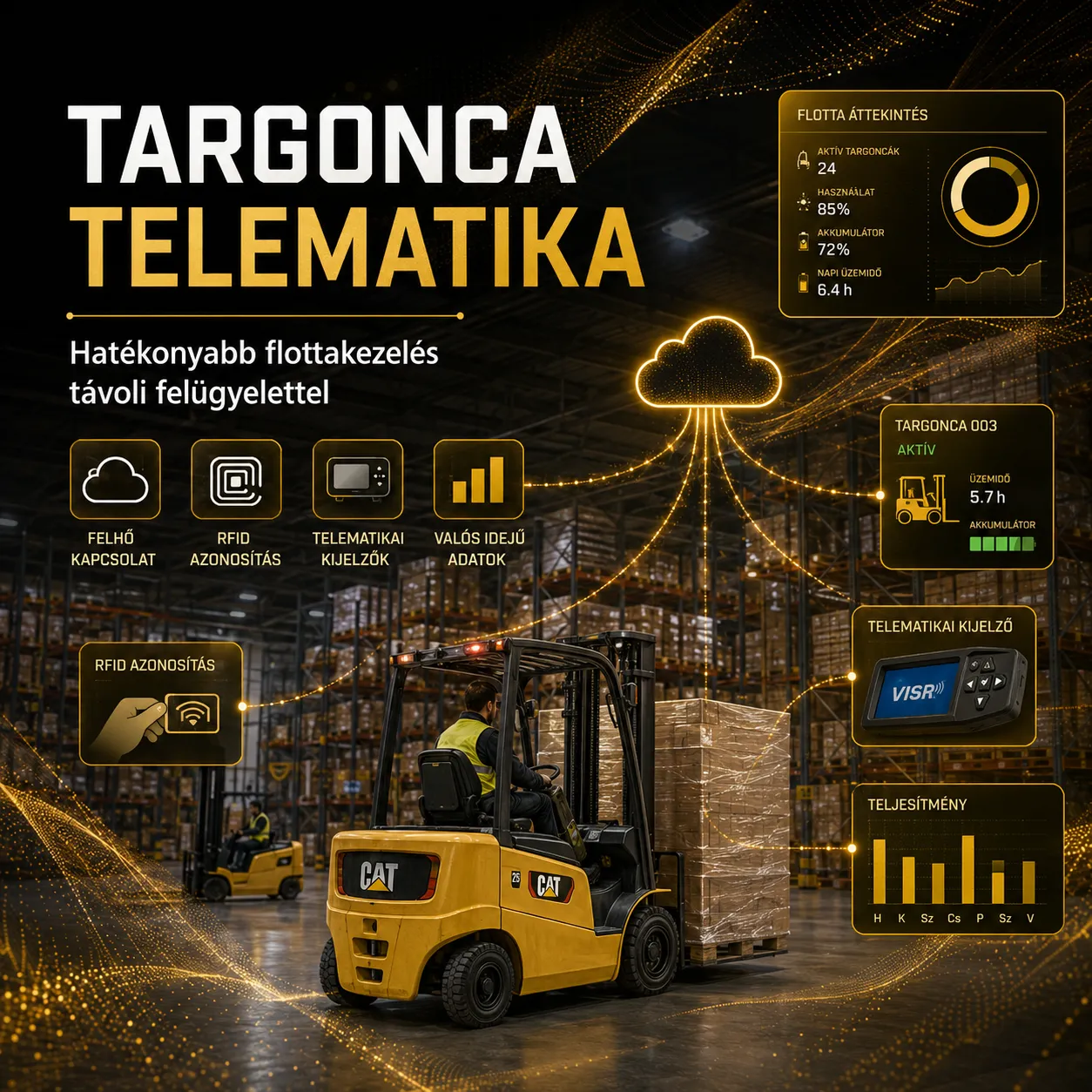
In modern warehouses and logistics centres, the performance of the forklift fleet has a direct impact on day-to-day operations. It is not enough for the machines to be working. It is also important to know where they are, who is using them, what condition they are in and how efficiently they are contributing to the work.
This is where forklift telematics helps.
A telematics system supports fleet management through remote data collection and analysis. It makes machine operation more visible, helps to reduce downtime, improves safety and puts more accurate decision-making in the hands of warehouse managers.
What is forklift telematics?
Forklift telematics is a digital solution that collects data on how forklifts operate and then transmits it to a central system.
Among other things, the system can monitor:
- the location of the machines,
- usage time,
- operator activity,
- impacts and shocks,
- completion of pre-use checks,
- machine utilisation,
- maintenance needs.
The data collected is displayed on an online interface, where the fleet manager or warehouse manager can quickly get an overview of how the entire forklift fleet is operating.
How does the telematics system work?
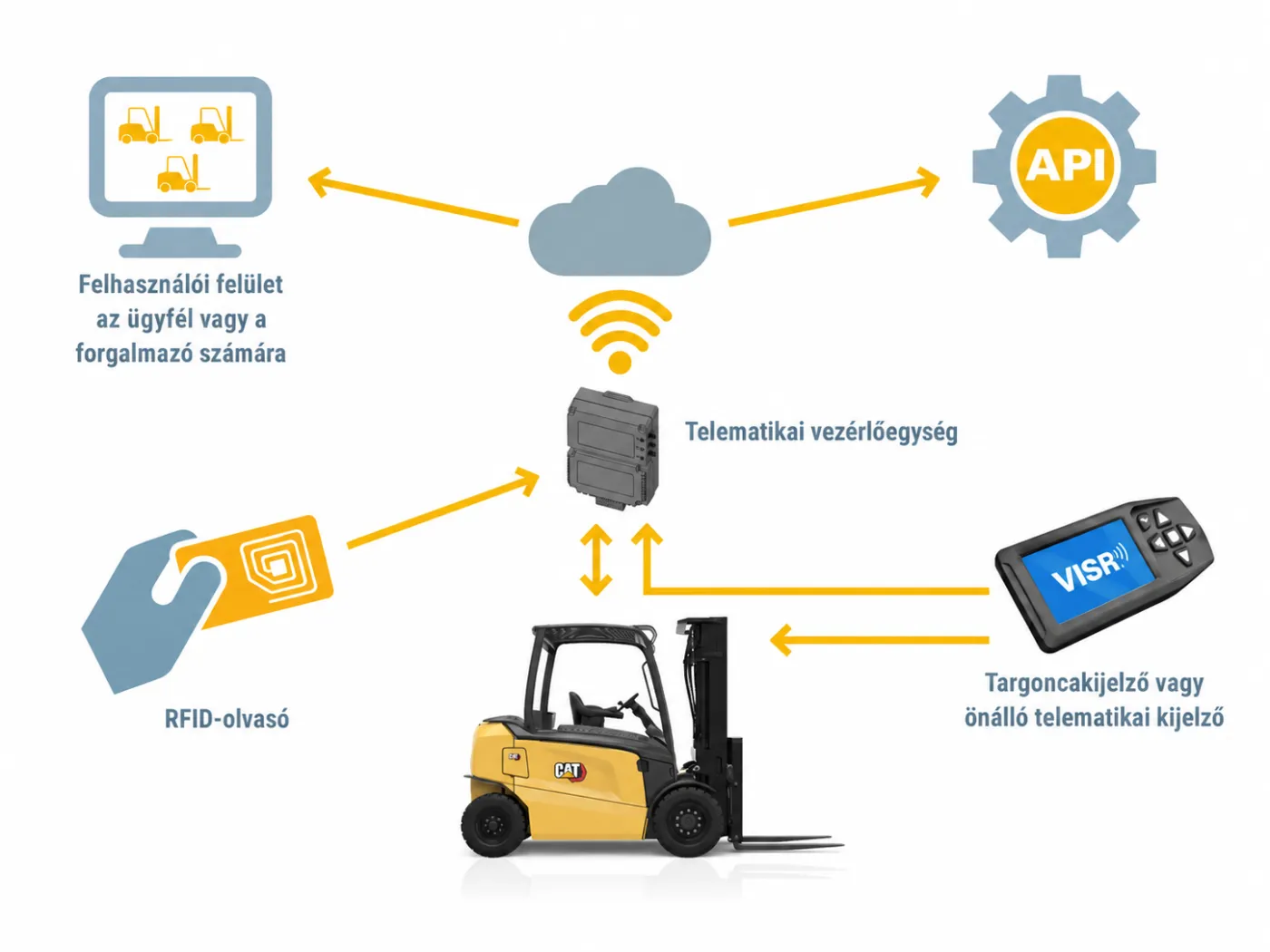
The system is based on a control unit that is built into the forklift. This unit continuously collects data from the machine and the associated sensors.
The data is transferred via a wireless connection to a cloud-based system. The fleet manager can then see the most important information on a user-friendly online interface.
The system does not just send data; it also creates a link between the machine and the central interface. In this way, the forklift, the operator and the fleet manager work together as part of a single digital system.
What questions does forklift telematics answer?
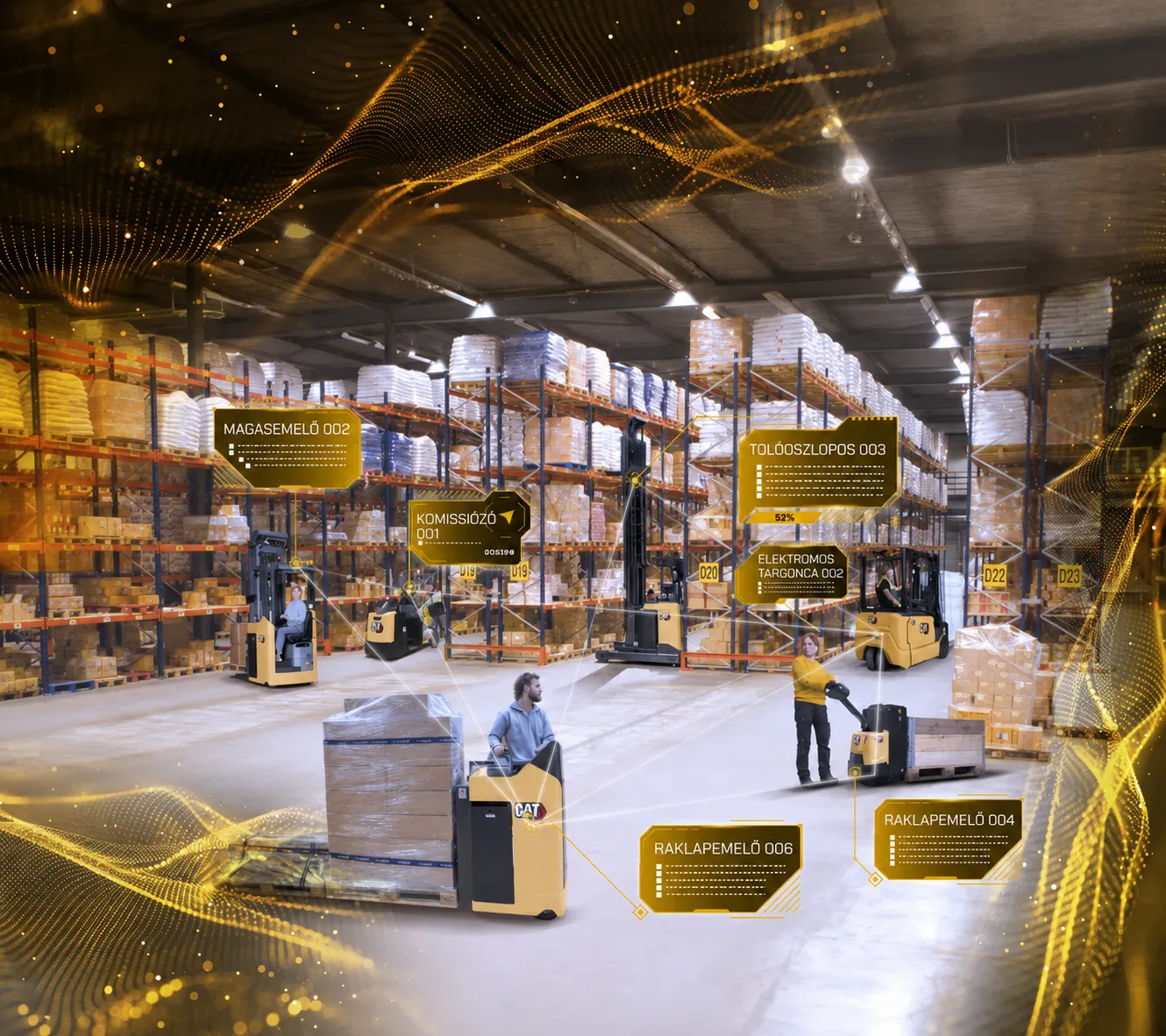
A well-functioning telematics system does more than show numbers. It provides practical answers to the questions of day-to-day operation.
For example:
- Where are the forklifts?
- Who is using a given machine?
- Has the operator carried out the pre-shift check?
- What condition is the forklift in?
- Has there been an impact or a heavy shock?
- Which machine is being overused?
- Which forklift is standing idle?
- How can the fleet be made more efficient?
This information helps to identify problems faster, plan work more accurately and make better use of the existing fleet.
Why is remote forklift monitoring important?
Many small losses can arise in warehouse operations. An underused forklift, a missed check, an unreported impact or poorly planned machine use can cause significant costs in the long run.
Remote forklift monitoring helps to spot these in good time.
Managers don't just receive information once there is already a problem. They can continuously see how the fleet is performing and where it is worth intervening.
Safer working with forklifts
One of the biggest benefits of telematics is its support for safety.
The system can help to check whether operators have carried out the necessary pre-start checks. It can also record impacts, shocks and other abnormal events.
This is useful in several respects:
- it is easier to uncover hazardous situations,
- operator behaviour can be tracked more effectively,
- the risk of damage to machines can be reduced,
- safety in the work area can increase.
The aim is not to monitor operators unnecessarily. The aim is to make work more transparent, safer and more predictable.
A more efficient fleet, fewer unnecessary costs
Forklift telematics shows how the machines are actually being used.
It may turn out that some forklifts are overloaded while other machines hardly work at all. It may also become clear that in certain processes, unnecessary waiting time or poor route planning is slowing work down.
Based on the data, it is easier to decide:
- whether a new machine is needed,
- whether the existing fleet can be reorganised,
- which machines need more attention,
- where downtime can be reduced,
- how day-to-day goods handling can be improved.
More accurate decisions can lead to more cost-effective operation.
Access control and operator identification
One useful function of telematics systems is operator identification. This can be done, for example, with an RFID card or another identification solution.
The advantage is that only authorised operators can use the machine.
This supports:
monitoring of machine use,
clarifying areas of responsibility,
safer operation,
transparency of operator performance.
This is particularly important with a larger fleet, because with more machines, more shifts and more operators it is harder to track usage manually.
Suitable for new and existing forklifts
A telematics system is not only useful for new forklifts. In many cases it can also be retrofitted to existing machines.
This is an advantage if the business already has a working forklift fleet but would like a clearer view of how it is used.
Telematics can therefore also be introduced step by step. It is not necessarily essential to replace the entire fleet for the business to obtain more accurate data on day-to-day operations.
Who should consider forklift telematics?
Forklift telematics can be particularly useful for businesses where several machines work at the same time, or where accurate performance measurement is important.
It can be a good choice for:
- logistics centres,
- larger warehouses,
- manufacturing plants,
- businesses working several shifts,
- high-traffic goods handling areas,
- companies with a mixed fleet.
The more complex the day-to-day materials handling, the more value accurate data collection can add.
Why is it worth introducing telematics?
Forklift telematics is not useful because of the data in itself. The value lies in the business being able to make better decisions based on that data.
It helps to:
- make work safer,
- reduce unplanned downtime,
- make machine use more transparent,
- improve fleet utilisation,
- reduce operating costs,
- speed up warehouse processes.
The system collects data from day-to-day operations, so managers can make decisions based on real information rather than assumptions.
Summary
Forklift telematics is an important tool in modern fleet management. It helps to monitor machines remotely, track usage, improve safety and optimise operations.
A well-implemented system makes warehouse processes more visible. It shows which machines are working efficiently, where risks arise and where day-to-day materials handling can be improved.
If your business would like to manage its forklift fleet more precisely, it is worth getting to know the benefits of telematics solutions.